From 212 pledges to 300, and +$324K committed
How First United Methodist Church in Murfreesboro used GivFlow pledge campaigns with Planning Center to make pledging easier and see results in real time.
The whole process is easy: setting up the emails, easy for people to make pledges, having the information in realtime is a big bonus. Not having to input the pledges into PCO. This is a real time saver. Since it goes into PCO, it makes it very easy to work with Lists and pull people out that have pledged.
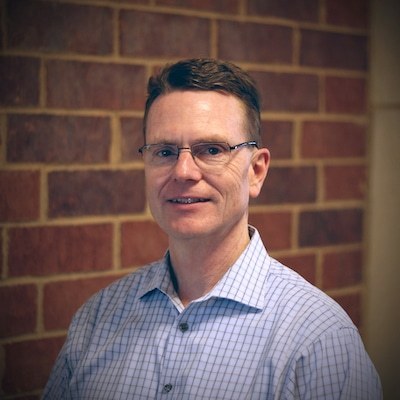
First United Methodist Church in Murfreesboro, Tennessee ran a GivFlow pledge campaign alongside Planning Center. Their church site is fumcm.org.
The story
Pledge season used to mean chasing forms and re-entering data into Planning Center. With GivFlow, the pledge form did a lot of the heavy lifting. When Fred’s team sent the email campaign, each email carried a personalized link, so donors opened a form that already knew who they were. No login, no lookup. They could pledge in a few taps, and the numbers showed up in real time, already in PCO and ready for Lists.
Their process was four emails over about seven weeks, each written for its group, and a text message just before the final ask. Fred was hoping for at least a 10% increase in pledges. The campaign did better than that: pledge count rose 42%.
Every donor opens a form that already knows them.
Each email carries a link that belongs to one donor. They tap it, and the pledge form opens ready to go. No login. No lookup.
- Your church sends the email
Written in your voice, sent to your list, one message per donor.
- Each email holds a personal pledge linkapp.givflow.com/pledge/7Kq2x…m9
The end of the link is a token that belongs to one donor.
- The form already knows SarahNo loginNo lookup
She enters an amount and taps submit. That’s the whole job.
- The pledge lands in your giving platform
First UMC uses Planning Center, so each pledge shows up there with no re-keying. Lists stay current.
Year over year
+88 · +42%
+$324K · +17.9%
After Commitment Sunday, the follow-up keeps going.
GivFlow pledge flows run on their own for the whole life of a pledge. Nobody has to remember who to thank or who to nudge.
- Not pledged yet
Invite to pledge
Givers who haven’t pledged get an easy invite, with their personal pledge link.
- Pledged
Recurring invite
Pledgers without recurring giving are invited to set it up, so their pledge stays on track. Recurring donors give more consistently.
- Giving
First gift toward a pledge
When a donor makes their first gift toward their pledge, they get a thank-you.
- Fulfilled
Pledge completed
When a donor fulfills their pledge, they get a thank-you.
Each flow runs automatically. See how pledge campaigns work.
Get the follow-up plan First UMC used
Four emails and a text message, each written for its group. Get the timeline and template wording you can adapt for your own campaign.
We just emailed you the full plan.
Check your inbox. If it isn’t there in a few minutes, look in spam or promotions. Here is a quick look while you wait.
Four emails over about seven weeks, each written for its group, plus a text message just before the final ask.
- Pledged last year. A thank-you, and an invitation to renew or step up.
- Gave last year, but didn't pledge. You already give. Make it a commitment.
- Attend, but haven't given yet. An invitation to start giving.
- Email 1The invitation
Each group gets its own invite, with a personal pledge link.
- Email 2Round two
A second note, written for each group.
- Email 3A third note
Another touch, still in each group's own voice.
- Text messageA short text
A quick text with the church's pledge link, just before the final ask.
- Email 4The final ask
A last, friendly call to pledge.
One campaign send, inside GivFlow
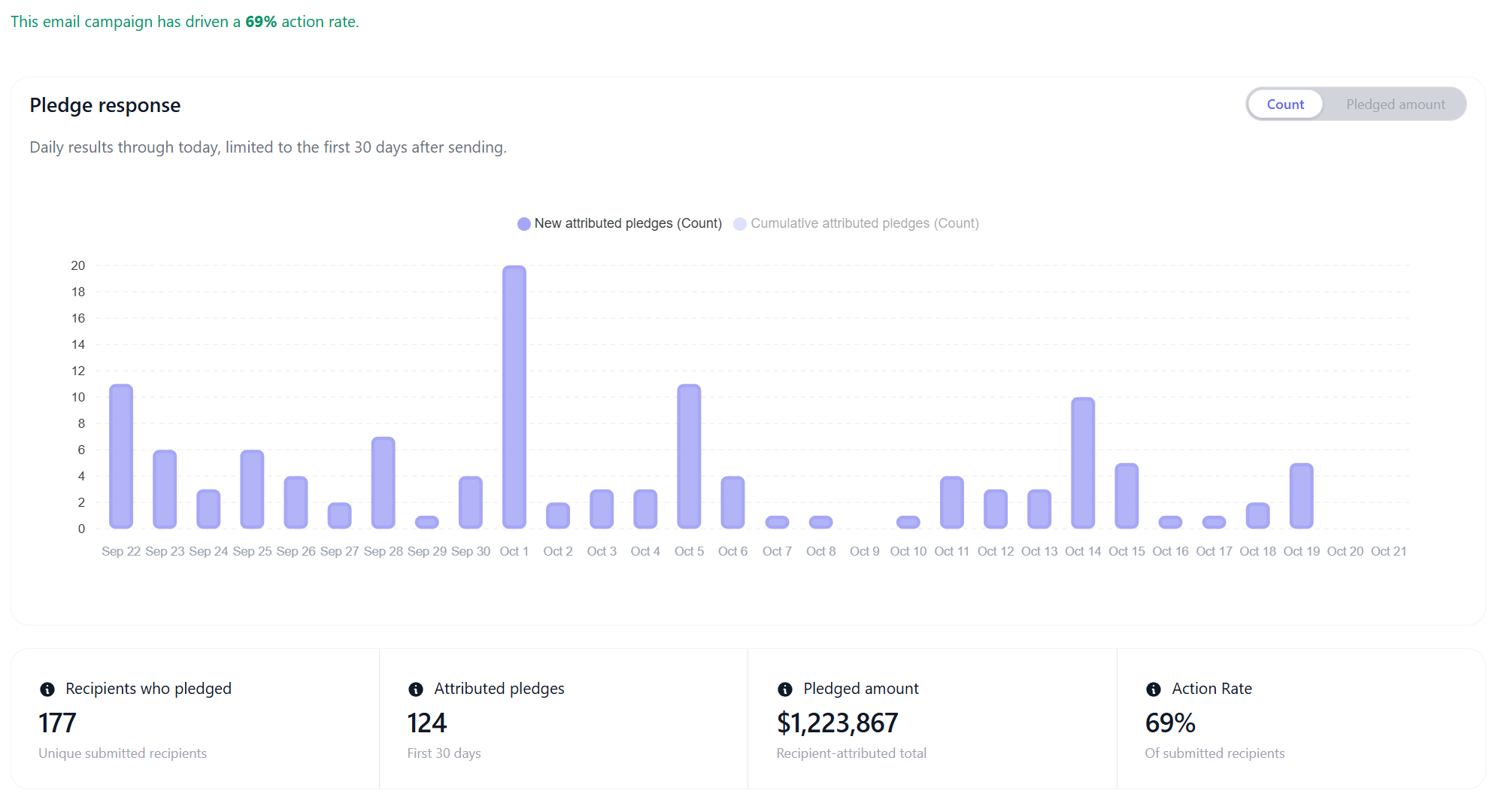
One campaign send, Sep 22 to Oct 21: a 69% action rate, 177 recipients who pledged, and 124 attributed pledges in the first 30 days.
From G2
Fred left a 5/5 G2 review on Oct 26, 2026, titled The Best Investment We Made in Our Giving Campaign.
It saves us a lot of time when reaching out to our lapsed credit card donors. I also appreciate having the ability to create pledge campaigns, which makes it easier to organize and manage our outreach.
What he dislikes: “There isn’t anything I dislike about GivFlow.”
Frequently asked questions
What results did First UMC Murfreesboro see with GivFlow pledges?
They went from 212 pledges for 2026 to 300 pledges for 2027, which is 88 more pledges (+42%). Commitments grew from $1,804,464 to $2,128,196 (+$323,732, +17.9%).
Do donors have to log in to pledge?
No. When the church sends a GivFlow pledge email campaign, each email includes a personalized link, so the donor opens their form already identified. No login step.
Does GivFlow write pledges into Planning Center?
Yes. Fred Halfpap highlights that pledges go into PCO, so the team does not re-key them, and can use Lists to find who has pledged.
Is GivFlow church pledge campaign software for Planning Center churches?
Yes. First United Methodist Church in Murfreesboro runs GivFlow alongside Planning Center for pledge campaigns: setup, donor-facing pledging, and real-time numbers.
What was Fred's goal for the campaign?
Fred was aiming for at least a 10% increase in pledges. The campaign landed a 42% increase in pledge count.
What did their outreach look like?
Four emails over about seven weeks, each written for its group, plus a text message with the church's pledge link just before the final ask. On one campaign send, 69% of submitted recipients took action and 124 pledges were attributed in the first 30 days.
Ready to see what GivFlow can do for your church?
Book a 30-minute walkthrough and we will show you how it would work with your church's giving data.