Bayside Community Church
We immediately saw it working. The first donor not only fixed their recurring gift—they made a manual donation to cover the one that failed. That one donor covered our entire GivFlow cost.
Like many churches, Bayside Community Church knew failed donations were a problem—but they didn't realize the extent of the missed opportunities. Planning Center would send one failure email to donors, but the church wasn't actively monitoring or following up. Gifts were being lost, and they had no systematic way to recover them.
Failed donations were slipping through the cracks.
Before GivFlow, Bayside wasn't actively monitoring recurring giving failures. Planning Center would send one automated email to donors, but there was no follow-up system in place.
"We were not monitoring it. We didn't realize the extent of the missed opportunities."
What Wasn't Working
- • 6.9% of Bayside's gifts failed in 2024
- • No systematic follow-up process
- • Manual lists and emails rarely happened
- • New donor engagement was inconsistent
Impact
- • Lost giving that could have been recovered
- • Donors felt disconnected
- • Missed opportunities to build relationships
- • Staff overwhelmed with other priorities
In 2024, 6.9% of all of Bayside's donations were failing. That adds up fast. Moreover, only 29% of those gifts were being recovered without followup.
GivFlow's automated and personal approach
GivFlow integrated seamlessly with Bayside's Planning Center account and immediately began monitoring donor activity. When a recurring gift failed, GivFlow automatically sent a gracious, personalized email explaining what happened and providing a simple path to fix it—without pressure or shame.
Key Automations Implemented
Bayside used budgets to reach out to new donors based on giving to multi-campus tithes and offerings funds or kingdom builders funds.
Failed Gift Recovery
Catch failed donations and recover them before they're lost forever
Build Recurring Giving
Turn inconsistent donors into recurring donors who give 4X the number of gifts
New Donor Welcome
Make a great first impression with every new giver
We immediately saw it working. The first donor not only fixed their recurring gift—they made a manual donation to cover the one that failed.That one donor covered our entire GivFlow cost.
Within the first week of launching GivFlow, Bayside saw their first success story. A donor received the failed gift notification, fixed their recurring donation, and went the extra mile—making a manual donation to cover the gift that had failed. That single recovered donation covered Bayside's entire GivFlow cost.
Immediate ROI and Long-Term Impact
Recovery Rate
~2.4× Better Recovery Rate
~2.5× Better Recovery Rate
Not only did GivFlow recover 2.5X more failed donations, we allowed Bayside to reach out to new donors and start building a relationship early. GivFlow added back real dollars, while also providing the donor care they wish they had time for.
"It was easy to see the benefits far outweighed the costs. The first donor to correct their giving and make a manual donation for the failed one covered the cost. GivFlow's willingness to allow a test period to prove this showed their confidence in the impact that would be there."
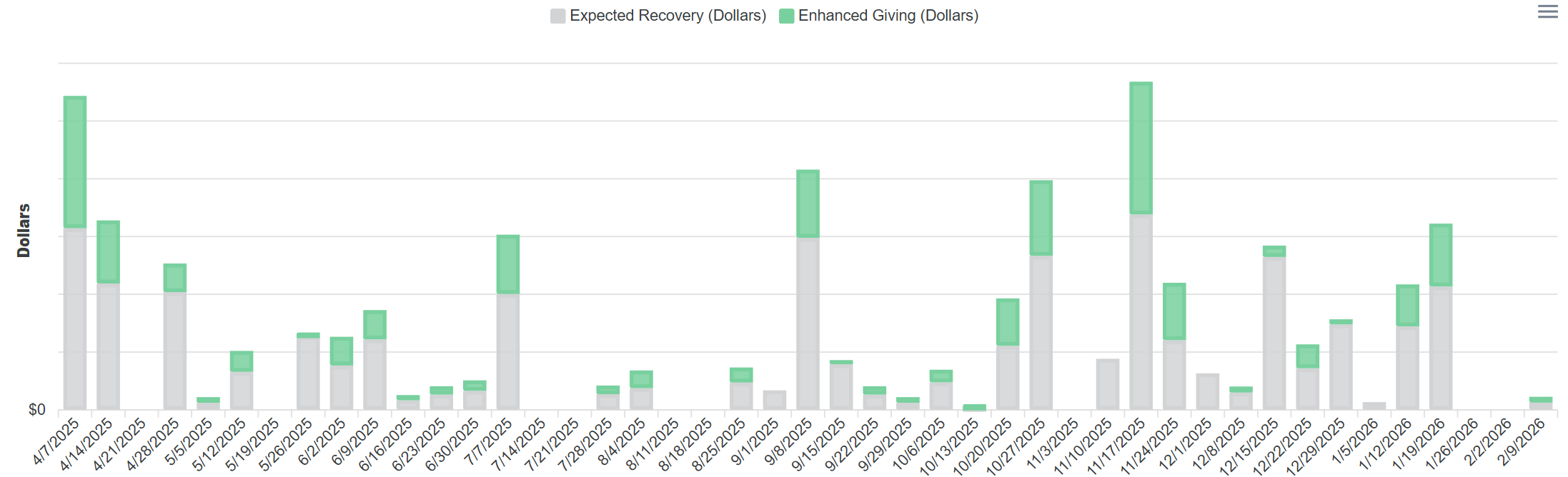
While we don't want to disclose Bayside's real numbers, we did want to visually show you the impact. Every green section of this bar chart, is real dollars GivFlow added onto giving.
Pastoral Care
GivFlow doesn't just solve a financial problem—it pastorally bridges the gap between generosity intended and generosity completed, serving both the church and the giver with care.
Pastor Johns's reflection captures something profound: failed donations can carry embarrassment or hesitation, especially when the gift was prayerfully intended. GivFlow allows churches to respond in a gracious, timely way—explaining what happened and showing a simple path to fix it without pressure or shame.
In that moment, it honors the donor's spiritual intent and preserves trust. GivFlow doesn't just solve a financial problem; it pastorally bridges the gap between generosity intended and generosity completed.
What changed for Bayside's team?
Before GivFlow
- • Failed donations went unmonitored
- • Manual lists and emails rarely happened
- • New donor engagement was inconsistent
- • Staff already stretched thin with other priorities
- • Missed opportunities to build donor relatioships
After GivFlow
- ✓ Automatic monitoring and recovery of failed gifts
- ✓ Donors fix issues without staff involvement
- ✓ Every new donor receives personalized welcome
- ✓ Team focuses on ministry, not manual lists
- ✓ Consistent, pastoral donor communication
"We immediately started thinking about additional automations that could help donors. An email to new donors with links to our Growth Track and Serve Opportunities has helped new engagement as well."
Who benefits most from GivFlow?
My first reaction is that the church benefits most, and for good reason. GivFlow reduces administrative friction, recovers giving that would otherwise be lost, improves cash-flow reliability, and provides clearer reporting for leaders. But the more I think about it, the more I realize the donor may benefit just as much, if not more. Failed donations can carry embarrassment or hesitation, especially when the gift was prayerfully intended. GivFlow allows us to respond in a gracious, timely way, explaining what happened and showing a simple path to fix it without pressure or shame. In that moment, it honors the donor's spiritual intent and preserves trust.
Ready to see what GivFlow can do for your church?